Claude Haiku 5.5
comparison
Claude Haiku 5.5
Claude Haiku 5.5 vs DeepSeek V3: A Complete API Comparison for Developers
The Claude Haiku 5.5 vs DeepSeek V3 decision is one of the most common forks teams hit when they start scaling an AI feature past the prototype stage. One is a polished, fast Anthropic model with a mature tooling ecosystem; the other is a low-cost, OpenAI-compatible workhorse that has reshaped how developers think about inference economics. This deep-dive walks through the architecture, API surface, pricing mechanics, migration pitfalls, compliance trade-offs, and production behavior you actually encounter when comparing Anthropic Claude Haiku API and DeepSeek V3 API workloads. If you want a practical, evidence-based way to decide — and to hedge that decision — this article is built for that.
Claude Haiku 5.5 vs DeepSeek V3: Core Differences at a Glance
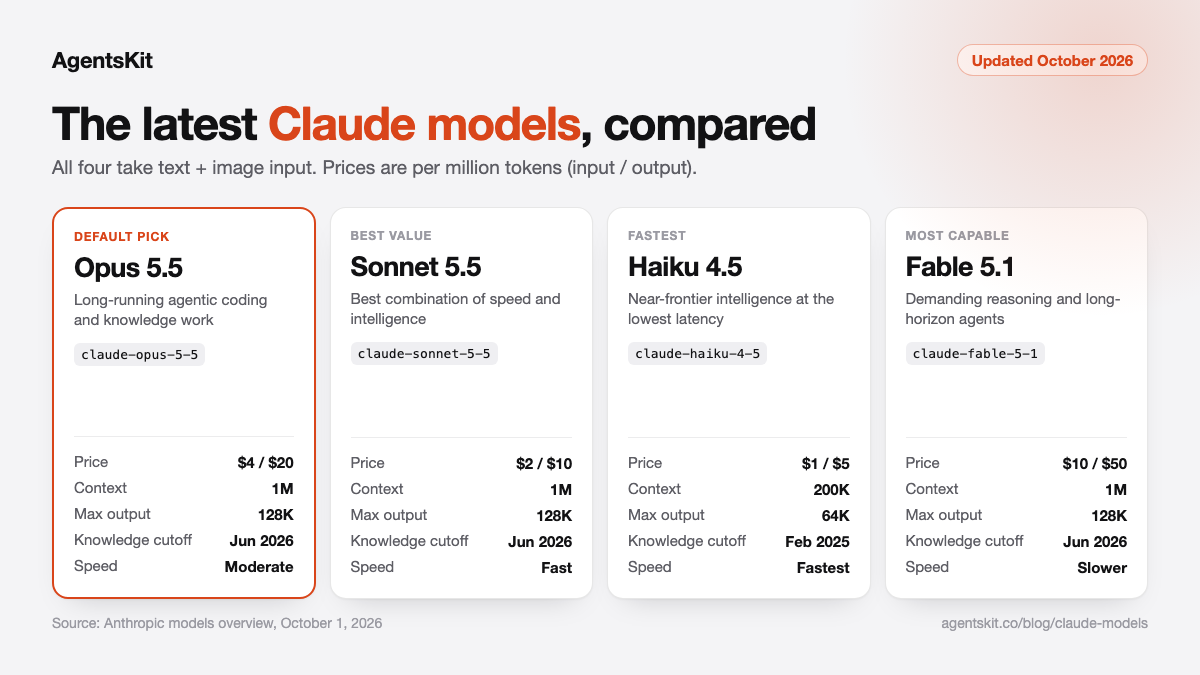
Think of these two as different tools in the same toolbox rather than direct head-to-head competitors. Haiku is optimized around being a dependable, low-latency tier inside a broader frontier-model family; DeepSeek V3 is optimized around raw cost-efficiency at scale while remaining good enough for the majority of general-purpose tasks.
Model Positioning and Intended Workloads

Claude Haiku 5.5 sits in Anthropic's "fast tier." It is designed for workloads where response time and predictable quality matter more than being the smartest model in the room: chat interfaces, classification, lightweight summarization, retrieval-augmented generation, and agent steps that call tools frequently. Anthropic positions the Haiku line as the entry point into its model family, and the general model overview is worth reading if you want to see how the tiers relate.
DeepSeek V3, by contrast, is a general-purpose Mixture-of-Experts model that behaves like a strong mid-tier chat model with an unusually low price. DeepSeek R1 is its reasoning-focused sibling — it spends more compute "thinking" before answering, which makes it a better fit for math, code synthesis, and multi-step planning, and a worse fit for chat where latency is king.
API Surface and Developer Experience
The developer-experience gap is smaller than most people assume. Anthropic ships an official SDK, first-class streaming, tool use, and a well-documented messages endpoint. DeepSeek exposes an OpenAI-compatible REST surface, which means you can often reuse the OpenAI SDK by pointing
base_urlWhere teams feel friction is in setup: keys, billing, regional access, and rate-limit onboarding. This is exactly the gap that Mydeepseekapi is built to close — a zero-setup layer for reaching DeepSeek V3 and R1 with transparent pricing, without standing up new accounts or re-plumbing your stack.
Anthropic Claude Haiku API Comparison: Pricing, Latency, and Rate Limits
Marketing pages tell you the model is fast and cheap. Production tells you whether that's true for your traffic pattern. Let's separate the two.
Claude Haiku 5.5 vs DeepSeek V3 API Pricing

Both providers charge by token, splitting input and output, with output costing meaningfully more. Anthropic generally offers prompt caching that discounts repeated context, and DeepSeek historically offers a cached input tier that is dramatically cheaper than a cache miss — DeepSeek's own pricing page breaks this down and is updated frequently. The practical implication is that if your system prompt or retrieved context is stable across calls, caching can dominate your bill far more than the headline per-token rate.
Watch for these cost levers:
- Input tokens (cache hit vs miss): the biggest swing factor in RAG workloads.
- Output tokens: usually priced 2–6x input.
- Reasoning tokens (R1): billed as output and easy to underestimate.
- Hidden retry cost: a 429 or a timeout that triggers a retry doubles your token spend on that request.
Mydeepseekapi publishes transparent pricing for V3 and R1 so you can model spend without reverse-engineering cache tiers.
Latency and Throughput Benchmarks
Measure two numbers, not one: time to first token (TTFT) and tokens per second (TPS). Haiku is generally tuned for low TTFT and stable streaming, which matters for chat and autocomplete. DeepSeek V3 typically delivers strong throughput at low cost, with Mydeepseekapi emphasizing blazing-fast response times as a practical advantage for interactive apps. R1 is slower by design because of its reasoning pass.
Cold-start effects, regional routing, and concurrency caps can swing your p95 latency 2–3x versus a warm single-request benchmark you ran on a laptop.
Rate Limits, Quotas, and Scaling Behavior
Rate limits are where "cheap" models sometimes stop being cheap — retries consume budget. Compare free-tier limits, paid-tier quotas, burst capacity, and how the provider signals resets (
Retry-AfterClaude Haiku Alternative API: When to Choose DeepSeek V3 or R1
Framed as a checklist, the decision becomes easier. Ask: how cost-sensitive am I, how deep must the reasoning go, do I need multimodal input, what are my compliance constraints, and what's my latency budget?
Decision Factors for a Claude Haiku Alternative API
- Cost sensitivity: high-volume, simple tasks favor DeepSeek V3.
- Reasoning depth: multi-step planning, math, and complex code favor DeepSeek R1.
- Multimodal: if you need image input, verify current model support carefully before committing.
- Compliance: regulated data may push you toward a provider with a matching audit posture.
- Latency tolerance: interactive UX favors Haiku; batch favors DeepSeek.
- Ecosystem fit: existing OpenAI-style tooling tilts toward DeepSeek.
DeepSeek V3 for High-Volume Generation, R1 for Reasoning
Use V3 for content generation, tagging, summarization, and chat at scale. Use R1 when you need the model to reason through a problem before answering — agentic planning, data extraction from messy documents, or code review. Mydeepseekapi lets teams integrate both into the same workflow, routing by task instead of rewiring per model.
Mydeepseekapi as a Zero-Setup DeepSeek V3 API Alternative
The biggest hidden cost in evaluating a "cheaper" model is the weeks spent on access, billing, and integration. Mydeepseekapi removes that friction: one key, transparent pricing, and immediate access to DeepSeek V3 and R1, so you can run real evaluations instead of reading benchmark tables.
DeepSeek V3 API Alternative: Migration and Integration Guide
Migrations fail on details, not on concepts. Below is a pragmatic path.
Switching from Anthropic Claude Haiku API to DeepSeek V3
The core mapping: Anthropic's top-level
systemmax_tokensSDK, Endpoint, and Authentication Changes
# DeepSeek via the OpenAI SDK — the fastest migration path
from openai import OpenAI

client = OpenAI(api_key="YOUR_KEY", base_url="https://api.deepseek.com")

resp = client.chat.completions.create(
    model="deepseek-chat",
    messages=[
        {"role": "system", "content": "You are a concise support agent."},
        {"role": "user", "content": "Summarize this ticket."},
    ],
)
print(resp.choices[0].message.content)
Because DeepSeek is OpenAI-compatible, most authentication and endpoint changes are a
base_urlTesting and Rollback Strategy
Run shadow traffic: mirror production requests to DeepSeek while Haiku still serves users, and compare outputs offline. Then do a small A/B test with a quality rubric. Define rollback triggers up front — a drop in task success rate, a spike in latency, or a cost-per-successful-request increase. Keeping both models live during migration is the single most effective risk control.
Real-World Performance: Claude Haiku 5.5 vs DeepSeek in Production
Benchmarks don't migrate; workloads do. Here's how the comparison plays out in practice.
Case Study: High-Volume Chatbot with a Claude Haiku Alternative API
A support chatbot handling tens of thousands of daily messages is the classic candidate. In practice, teams report that DeepSeek V3 via Mydeepseekapi cuts per-message cost substantially on generation-heavy traffic, with quality that is close enough for templated, FAQ-style responses but occasionally weaker on nuanced escalation decisions. The lesson: route easy turns to V3, escalate hard turns to a stronger model.
Lessons from Migrating Reasoning Workloads to DeepSeek R1
R1 shines on agentic workflows and structured data extraction where the model needs to plan multiple steps. It underperforms Haiku in latency-sensitive chat because of its reasoning pass. A common mistake is assuming R1 replaces Haiku everywhere — in reality, the right architecture uses both.
Production Monitoring and Quality Drift
Track evals on a fixed prompt set, hallucination rate on a labeled sample, response consistency, and p95 latency alerts. In a multi-model setup, log the model per request so a quality drift in one tier doesn't hide behind aggregate metrics.
Under the Hood: Architecture, Context Windows, and Output Quality
How Claude Haiku 5.5 and DeepSeek V3 Handle Context
Both support large context windows, but effective context — how well the model actually uses tokens in the middle of a long prompt — is what matters. Truncation risk rises sharply once you exceed comfortable ranges, and "bigger context" rarely means "better recall." Chunking and retrieval still beat stuffing.
Tokenization, Multilingual Performance, and Formatting
Tokenizers differ, so the same text can cost different amounts across providers — a hidden pricing factor. DeepSeek V3 performs strongly on multilingual content, while markdown and structured-format reliability varies by model version. Always test your real output format, not a toy example.
Tool Use, JSON Reliability, and Structured Output
Anthropic's tool use is mature and returns structured arguments. DeepSeek supports OpenAI-style function calling and JSON mode, with generally reliable schema adherence but occasional malformed JSON that requires a repair pass. Mydeepseekapi supports both V3 and R1 in workflow automation, which simplifies routing.
Trust and Transparency: Benchmarks, Limitations, and Hidden Costs
What Official Documentation and Independent Tests Reveal
Always verify specs against primary sources — the Anthropic model documentation and the DeepSeek API docs — because model versions and prices change quickly. Community benchmarks are useful for direction, not for procurement.
Pros and Cons of Claude Haiku 5.5 vs DeepSeek V3
| Dimension | Claude Haiku 5.5 | DeepSeek V3 |
|---|---|---|
| Quality (nuanced tasks) | Strong | Good |
| Cost | Higher | Lower |
| Latency | Low TTFT | Good throughput |
| Ecosystem | Mature SDK | OpenAI-compatible |
| Compliance | Broad enterprise posture | Verify per region |
Hidden Costs: Retries, Rate-Limit Backoff, and Observability
Retry amplification, exponential backoff, log storage, and eval infrastructure are real line items. Mydeepseekapi's transparent pricing reduces billing surprises by making cost-per-request legible before you ship.
Security, Compliance, and Data Handling for API Workloads
Anthropic Claude Haiku API vs DeepSeek V3 API: Privacy and Governance
Compare data retention, whether inputs are used for training, regional processing, and access controls. Never send regulated data to any provider until you've confirmed its retention policy in writing.
Enterprise Requirements: SOC 2, GDPR, HIPAA, and Audit Trails
Map each requirement to documented provider capabilities, and ask Mydeepseekapi directly about DeepSeek access governance, logging, and regional options.
Self-Hosting vs Managed API with Mydeepseekapi
Self-hosting DeepSeek gives control but adds GPU ops, scaling, and upgrade burden. Managed access via Mydeepseekapi trades a little control for dramatically less operational risk.
Implementation Checklist: Choosing Between Claude Haiku 5.5 and DeepSeek
Decision Matrix for Claude Haiku Alternative API Selection
| Factor | Weight | Haiku 5.5 | V3 | R1 |
|---|---|---|---|---|
| Cost | 25% | 3 | 5 | 4 |
| Latency | 20% | 5 | 4 | 2 |
| Reasoning | 20% | 4 | 3 | 5 |
| Compliance | 15% | 5 | 3 | 3 |
| Ecosystem | 10% | 5 | 4 | 4 |
| DX | 10% | 5 | 4 | 4 |
Benchmarking Your Own Workload Before Committing
Build a 100-prompt sample from real traffic, define a rubric, set latency and cost thresholds, and run it through Mydeepseekapi for V3 and R1 alongside Haiku.
Cost Modeling Template for DeepSeek V3 API Alternative
Monthly cost ≈ (input_tokens × input_rate + cached_tokens × cached_rate + output_tokens × output_rate) × requests × (1 + retry_rate)Add observability and eval overhead, then compare columns for Haiku and DeepSeek using your own measured token counts.
Final Thoughts
The Claude Haiku 5.5 vs DeepSeek V3 question rarely has a single winner. Haiku rewards latency-sensitive, quality-critical, compliance-heavy workloads; DeepSeek V3 and R1 reward cost-sensitive, high-volume, and reasoning-heavy ones. The most resilient teams run both, route by task, and evaluate with their own traffic. If you want to test DeepSeek V3 and R1 without setup overhead, Mydeepseekapi is the fastest on-ramp. Verify current pricing and specs against provider documentation, benchmark your own prompts, and let the numbers — not the marketing — make the call.